< Back to Stories

ADU Accelerator: Lessons Learned

May 20, 2026

ADU Accelerator: Harder than Expected, Better than we’d Hoped

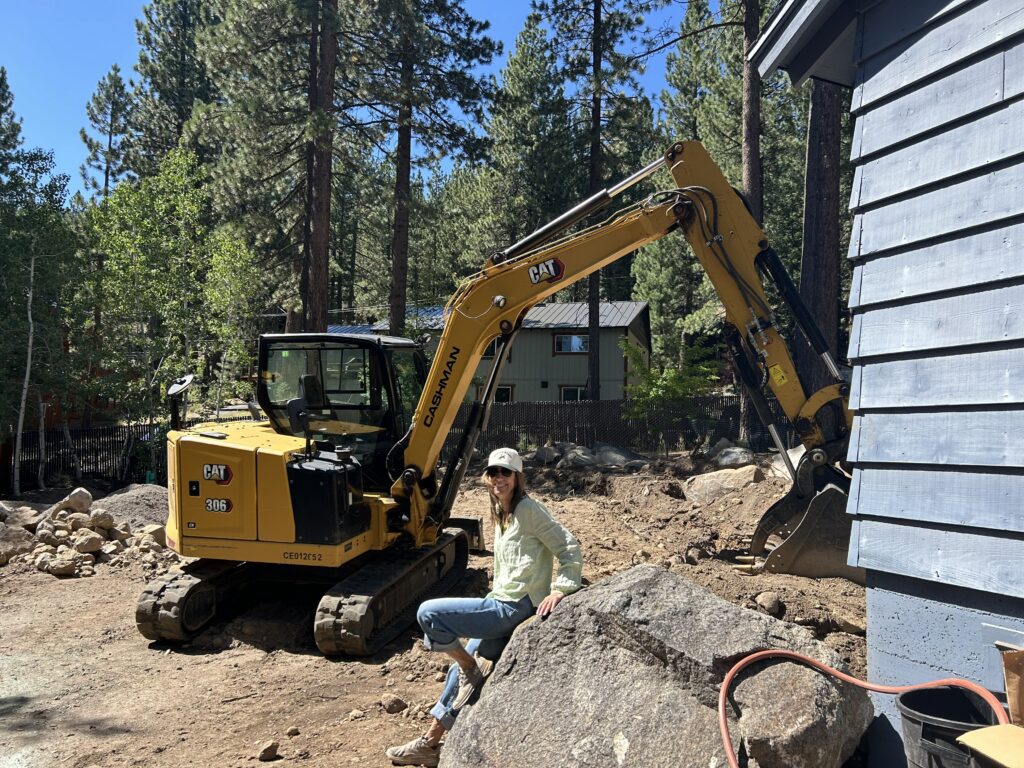
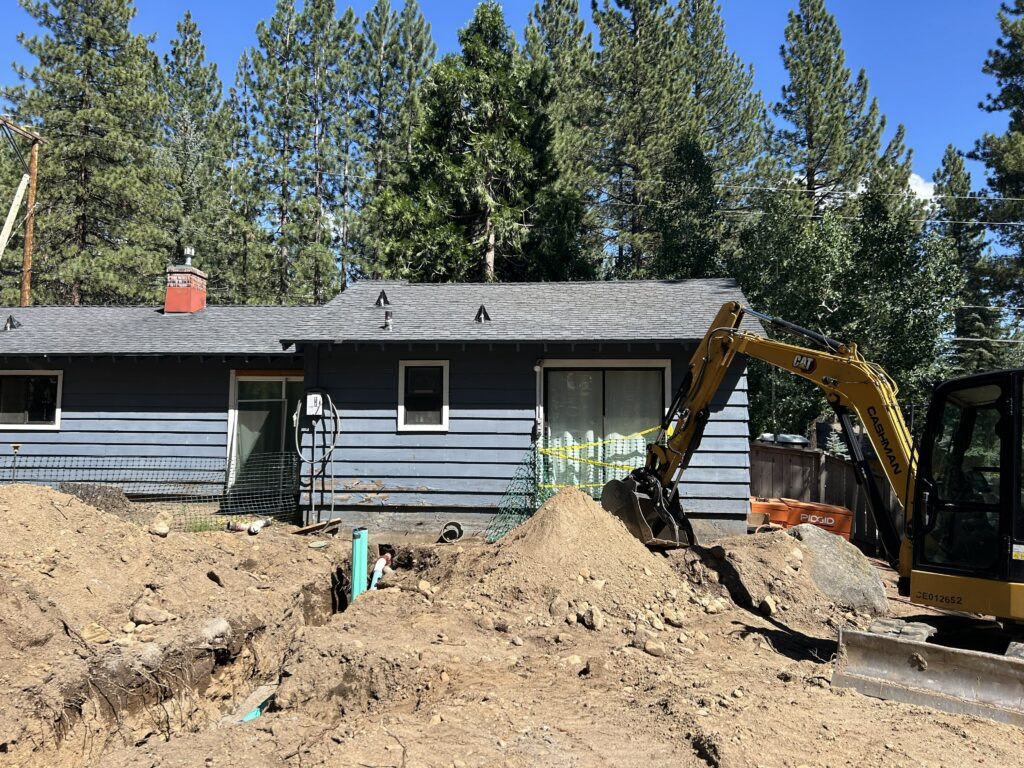
When the Tahoe Housing Hub launched our ADU Accelerator Pilot Program in the fall of 2024, the community response was incredible. We received over 100 inquiries and registered more than 80 interested participants. We were poised to help homeowners build backyard Accessory Dwelling Units (ADUs) to house our local workforce.

What followed was nearly two years of hard lessons. As individual projects progressed, the realities of building in North Lake Tahoe came into clear focus — and we had to adapt. We found new products, built out our consultant team, and learned what it actually takes to move housing projects across the finish line in this region. It took time. But here we are.

The Reality of the Basin: High Costs and Complexities

Many of our participants quickly ran into a major roadblock: the extreme complexity and high cost of traditional construction in our region. For a significant number of property owners, the math simply didn’t add up, forcing them to put their ADU dreams on hold.

Determined to find a solution, we dove deep into researching alternative construction methods to cut costs and speed up build times. This search led us directly to factory-built housing, including prefabricated, modular, panelized, and Tiny Homes on Wheels (THOWs).

Exploring Factory-Built Solutions

Prefab and modular homes offer distinct advantages over traditional stick-built construction. Because most of the building happens inside a climate-controlled factory, weather delays disappear. Builders do not need to worry about working through our harsh winters; instead, delivery and installation can be scheduled seamlessly during the summer months.

As we worked with participants, it became clear that different situations called for different solutions. For some, factory-built or traditional construction was the right path. For others — particularly organizations with underutilized land who needed something simpler and faster to deploy — Tiny Homes on Wheels turned out to be the answer.

A Growing Portfolio: Stick-Built, Conversions, and Tiny Homes on Wheel

After months of rigorous research, we found a manufacturer capable of producing THOWs that meet our strict local snow load requirements at an affordable price point. With this new tool in hand, we expanded our outreach. We looked beyond individual homeowners to partner with:

  • Churches
  • Special districts
  • Local businesses
  • Organizations with underutilized land and a vital need for workforce housing

We now have seven organizational clients in the pipeline, on track to add up to 20 THOWs within the next year.

And that’s not all — traditional projects are moving forward too. We currently have two detached ADUs and six conversion units under construction this summer, proving that conventional ADU pathways remain viable in the North Tahoe/Truckee region.

There is No “One Size Fits All” Solution

The biggest lesson we learned from our pilot program is that there is no single way to build an ADU in the North Tahoe/Truckee region.

As the very first units facilitated by the ADU Accelerator Program hit the construction phase, we are incredibly excited for the future. Whether it is a tiny home on wheels, a garage conversion, or a traditional stick-built detached unit, the lessons we have learned have shown us exactly what is possible. We look forward to helping many more property owners become a tangible part of our local housing solution.

To learn more about the free technical services offered through our ADU Accelerator program – please reach out! You can contact us at info@tahoehousinghub.org or by visiting our website HERE.

< Back to Stories

Voices for Housing Episode 4: Alison Part 2

May 20, 2026

This is part 2 of Alison’s story. After years of moving from one rental to another, she and her family reached a tipping point – move out of the area or stay and find a forever home. Alison shares more about the difficulty of first-time home ownership in the Tahoe region and how they made it work.

The Voices for Housing campaign is made possible thanks to a generous grant from the North Tahoe Community Alliance’s TOT-TBID Dollars at Work Program.

< Back to Stories

Voices for Housing Episode 3: Alison Part 1

April 14, 2026

In this episode of Voices for Housing, we introduce you to Alison. Her work is critical to the environmental protection of Lake Tahoe. Alison explains how difficult it is to hire and retain quality workers simply because they cannot find affordable housing. This impacts not just the workers themselves, but the businesses who want to hire them. Building a thriving local economy is tied directly to having safe, dignified, affordable housing for local workers. This is Part 1 of Alison’s story.

The Voices for Housing campaign is made possible thanks to a generous grant from the North Tahoe Community Alliance’s TOT-TBID Dollars at Work Program.

< Back to Stories

Voices for Housing Episode 2: Xander

March 18, 2026

This week we introduce you to Xander Guldman, a professional skier raised in Truckee who has come back after college to build his life here. For Xander, Tahoe/Truckee isn’t just where he skis. The mountains he grew up on, the community he’s built his life around, and the access to the outdoors make everything else in his life possible. But it all depends on the availability of affordable housing. Listen to Xander’s take on what makes this place so special and also so hard to hold onto.

The Voices for Housing campaign is made possible thanks to a generous grant from the North Tahoe Community Alliance’s TOT-TBID Dollars at Work Program.

< Back to Stories

Voices for Housing Episode 1: Mary

February 23, 2026

We are thrilled to launch Voices for Housing, a new campaign dedicated to sharing Tahoe Truckee housing stories from our community. Over the next several months, we will introduce you to local residents from diverse personal and professional backgrounds who all have a unique housing story to share.

We start with Mary, a local artist and retiree who explains her deep connection to Kings Beach. Her story is a perfect example of why housing for all matters for the creative heart of our community.

The Voices for Housing campaign is made possible thanks to a generous grant from the North Tahoe Community Alliance’s TOT-TBID Dollars at Work Program.

< Back to Stories

2026 Federal Housing Policy Review

January 27, 2026

Article by David Garcia, Terner Center for Housing Innovation, January 21, 2026

Link to article here.

After a surprising year of housing policy bipartisanship, lawmakers in Washington, DC are poised to continue pushing for housing supply and affordability solutions in 2026. At the same time, ongoing actions by the administration will continue to pose challenges to housing providers, developers, and the most housing insecure, while new and potentially forthcoming orders demonstrate a willingness to use executive power to address affordability concerns. As we head into an election year, there are several developments worth following in federal housing policy. This commentary previews the year ahead in Washington, DC.

Housing packages are poised to move forward in 2026.

By the end of 2025, both the House and Senate had advanced their own bipartisan bills to increase housing supply and promote affordability. And while the two packages (The ROAD to Housing Act in the Senate, and the Housing for the 21st Century Act in the House) have several unique and novel components, they also feature many overlapping and/or complementary features. Both packages have an opportunity to progress in the first half of this year before lawmakers turn their attention to the November election.

The ROAD to Housing Act, which passed out of the Senate Banking and Insurance Committee unanimously and was nearly passed into law as an amendment to the National Defense Authorization Act (NDAA),[1] contains several provisions that would have a positive impact on housing supply. These provisions include an expansion of the Rental Assistance Demonstration program (RAD) to preserve existing public housing,[2] reforms to existing federal loan products to support Accessory Dwelling Unit (ADU) financing,[3] and new programs leveraging existing federal dollars to promote more homebuilding in supply-constrained markets. As noted in a Terner Center commentary, the negotiation and advancement of ROAD to Housing represent a shift in how policymakers are approaching federal engagement on housing supply issues.

The Housing for the 21st Century Act advanced from the House Financial Services Committee on a vote of 50-to-1 just before the end of 2025. The Act includes provisions that are similar or identical to ROAD to Housing—for example, the Housing Supply Frameworks Act, reforms to the National Environmental Protection Act, and increases to Federal Housing Administration (FHA) mortgage insurance for residential multifamily construction. However, the proposed House legislation also includes a number of unique ideas that would support increases in housing supply and affordability. These include changes to the application of Build America, Buy America requirements for new homes using HOME Investment Partnerships Program (HOME) funding,[4] requirements that cities report on their progress toward reducing barriers to housing production as part of federal funding reporting, and an examination of how building code reforms could reduce the cost and complexity of homebuilding.

Lawmakers have limited time to move each package forward before members turn their attention to their respective 2026 election campaigns. In the Senate, ROAD to Housing must now be brought back to a vote of the full chamber. The next step for the Housing for the 21st Century Act will be a vote on the floor of the full House. Both could be advanced in the earlier part of the year, setting up a conference committee between the two chambers to send legislation to the president’s desk for signature into law.

The budget deal is poised to maintain funding for critical housing programs.

Senate and House members released their FY 2026 budget agreement on Tuesday, which generally maintains and even increases some funding for affordable housing and infrastructure programs, while increasing resources to vulnerable residents—despite earlier indications that those programs would face steep reductions. For example, lawmakers have proposed that the Community Development Block Grant (CDBG) Program and HOME both maintain the same funding levels as FY2025 after earlier facing nearly $1 billion less in last year’s budget proposal. In addition, $50 million is included for another round of the CDBG PRO HOME program, which provides support for localities pursuing land use and zoning reforms. Legislators have also proposed a funding increase over FY2025 levels for Housing Choice Vouchers (HCV), Project Based Rental Assistance, and Homeless Assistance Grants. Congress, which has been operating on a continuing resolution since November of last year, has until January 30 to vote on the full budget.

The budget deal also appears to include a solution for the Emergency Housing Voucher (EHV) program, which provides rental assistance to people experiencing or at risk of homelessness. EHV program funding was set to run out before the end of 2026. In the budget, $600 million is allocated to Tenant Protection Vouchers, which can be used to support current EHV holders. This is significant as our recent analysis notes that over 50,000 households nationwide are served through the program and would be at risk of losing that assistance.

The funding bill also includes language that would amend the U.S. Department of Housing and Urban Development (HUD’s) newly proposed guidelines for its largest homelessness program, the Continuum of Care (CoC) Program, which are currently suspended by a court order. HUD’s proposed funding criteria would have changed the CoC Program in many ways that would shift funding away from current permanent housing programs, potentially jeopardizing housing for 32,000 people in California. The bill would limit the extent to which HUD can make these shifts. It would also ensure funding continuity for current program awards that are scheduled to end prior to the next funding application process.

Executive Actions will continue to impact housing markets.

In addition to Congressional activity, the administration has signaled for several months that it has been working on Executive Actions to address housing supply and affordability, with President Trump saying in December that actions will include “some of the most aggressive housing reform plans in American history.”[5]

Statements from other administration officials signal that such actions could include the creation of new mortgage products and rule changes to allow for potential homebuyers to tap their 401(k) for down payments, as well as conditioning federal funds for states and cities on the adoption of policies to make it easier to build new homes. On January 20, President Trump also signed an Executive Order, which he alluded to in his remarks at the World Economic Summit, directing agencies to pursue initiatives aimed at curbing large institutional investor activity in the single-family home market. The Order would have the attorney general and the Federal Trade Commission review large acquisitions for anti-competitive practices and order other departments to promote sales to owner-occupants.

In addition, continued action on tariffs and immigration are likely to have a substantial impact on new supply. For example, multiple analyses by researchers and industry groups note that tariffs imposed or proposed in 2025 have the potential to increase the cost and uncertainty of new homebuilding. Increased deportation activity has also put a chill on residential construction labor supply, where immigrants comprise roughly a quarter of the labor force.[6] In California, more than two-thirds of California contractors cite skilled worker shortages as their top concern, and the state has faced a net loss of construction workers just in the last year.[7]

This year is likely to be consequential for housing affordability.

Polling going into this election year suggests that housing affordability will continue to be a consequential issue, and during campaign season, members of both parties are likely to want to showcase their efforts to advance meaningful legislation. Moreover, success on housing this year could set the table for even greater reforms in the next Congress and beyond. But for this momentum to continue into the next Congress, maintaining bipartisan support for housing solutions during what is likely to be a highly polarizing campaign will be critical.

Endnotes

[1] Lawmakers in Congress will often leverage “must-pass” bills to advance other priorities that are not relevant to the “must-pass” legislative vehicle. The NDAA is considered a “must-pass” bill to ensure funding for national defense.

[2] The RAD program allows public housing providers to rehabilitate existing units by leveraging private debt. We explored the potential of this program in a 2023 paper.

[3] A 2022 Terner Center paper explored the creation of loan products through existing federal programs specifically to provide homeowners with a broader selection of financing options.

[4] The Build America, Buy America Act (BABA) requires that all iron and steel, construction materials, and manufactured products used in federally funded infrastructure projects are produced in the United States. Affordable housing organizations have raised concerns that requiring affordable housing projects to adhere to BABA raises the cost of development.

[5] Samuels, B., & Manchester, J. (17 December, 2025). “Trump touts ‘warrior dividend’ checks, housing reform in address to nation.” The Hill. Retrieved from: https://thehill.com/homenews/administration/5654365-trump-primetime-address-housing-checks/

[6] National Association of Homebuilders. Concentration of Immigration in Construction Trades. Retrieved from: https://www.nahb.org/advocacy/industry-issues/labor-and-employment/immigration-reform-is-key-to-building-a-skilled-workforce/concentration-of-immigration-in-construction-trades

[7] The Home Builders Institute (HBI) Construction Labor Market Report. (2025). Home Builders Institute. https://hbi.org/wp-content/uploads/2025/10/Fall-2025-Final-Construction-Labor-Market-Report-Update.pdf; California Construction Workforce Trends 2025. (2025). ABLEMKR. https://ablemkr.com/california-construction-workforce-trends-2025/

< Back to Stories

Article: Why State Housing Reform is Failing (and What We Can Do About It)

January 26, 2026

In this article by Edward Erfurt, published in Strong Towns on December 2, 2025, the author breaks down the reasons why building infill housing like ADUs is so difficult. The complexities and risk profiles for individual homeowners building an ADU are vastly different than they are for large developers. This article provides a great explanation of why.

Link to full article HERE.

Across the country, state legislatures are taking bold steps to make more housing possible. Parking mandates are being rolled back. Accessory dwelling units (ADUs) are being legalized. Entire housing types that were prohibited for decades are now being allowed by right.

For many communities, these changes feel like long-overdue progress. Yet even in the most supportive communities, almost nothing is getting built.

After all the effort, all the hearings, all the debate and negotiation, the number of new units emerging from these reforms is at best a trickle. As I travel across the country talking to communities, these local governments are asking the same question: Why?

The answer reveals something deeper than zoning.

The Paradox of Legalizing Something You Can’t Actually Do

Legalization is the first step, but it is not the ecosystem. I was in Flagstaff, Arizona when the local city council had declared a housing emergency. City staff shared how they wanted to see ADUs built as an option to address the housing crisis. The community was on board politically, because they expanded the applicability of ADU to cover the entire city. But “allowed by right” didn’t translate into “possible in practice.” Builders still couldn’t make the projects work. They could not make these work not because the idea was wrong, but because there’s no broader system to support small-scale development in place.

Our approach to zoning and adoption of codes have left communities with an inability to take action. Over the years, permitting processes grew more complicated, layers of review multiplied, and neighbor veto points cemented themselves into procedure. On top of it all, the procedures in place aren’t proportional to the project. The smallest of projects must navigate systems designed for the largest of developments. A 600-square-foot backyard cottage must comply with the same development standards, permitting submission requirements, and timelines as a 2,500-square-foot house on a one-acre lot.

This tangle of requirements occurs all before we reach the financing system, where nearly every available tool is designed for one thing: standardized, federally backed, single-family houses on large lots. These are the mortgages that banks can bundle and sell on secondary markets, at very low risk. Builders must stack more complicated, and expensive financing that is not readily accessible to all. 

State law can declare that small backyard cottages are legal. But unless cities can review them, permit them, and builders can finance them, legalization will remain largely symbolic.

When State Reform Crashes Into Local Capacity

This gap between the state’s mandate and the city’s ability to carry it out is where the real struggle begins. Cities often default to their only familiar process, so what we’ve seen is that they’ll apply the same permit process for a small ADU as they would a multifamily building. Cities use the permits and processes they know because they have no other smaller template, or worse, they create an even more complicated process. What should be the lowest risk investment, quickly becomes overly complicated and far more risky. That shift in risk matters. Small builders or homeowners are working in the thinnest of margins and uncertainty and risk increases costs.

What looks like a simple option for affordable housing on paper quickly becomes quite unintentionally the most expensive housing to deliver in the city.

Imagine a homeowner walks in, hoping to build a cottage no larger than a shed in their backyard, or convert their garage into an apartment. They’re handed the thick binder of requirements to address all of the unknowns that could occur. The natural reaction of municipal staff when they face uncertainty is to demand more. So an exhaustive and detailed process is initiated to root out and eliminate every possible failure or conflict. The result is a tangle of forms and submittals that imply that perhaps the applicant shouldn’t attempt this after all.

A builder deciding between a modest cottage in an established neighborhood and a large single-family home on the edge of town will likely choose the easier path. When both projects offer the same financial return, people understandably choose the one with fewer headaches. Cities unintentionally push small-scale builders away, not through policy, but through friction.

A Case Study in What Works: Tallahassee’s Breakthrough

We’ve seen the opposite, too. Tallahassee, Florida, had very few ADU permits. Only a handful of persistent builders attempted them. Rather than defending their process, city staff sat down with those builders and listened to learn where there were tangles and friction. They asked where the bottlenecks were. They investigated every confusion point, every unnecessary submittal, every erroneous requirement, and sought out conflicting requirements. Then they made small adjustments: clarifying intent, adjusting standards to align with existing zoning, and making procedures proportional to the scale of the application.

The result? An exponential increase in permits.

This wasn’t a statewide mandate. It wasn’t a massive rewrite. It was staff learning the scale of the work and responding proportionally. They built the local ecosystem necessary for incremental housing to succeed.

What State Mandates Can’t Do

A mandate can change the zoning, but it cannot:

  • Teach staff how to right-size their review.
  • Build trust between cities and local builders.
  • Reform decades of overengineered building codes designed for the biggest projects.
  • Create financing tools that fit the scale of a backyard cottage rather than a cookie cutter suburban home.
  • Form local partnerships between small banks and small developers.
  • Reduce the cultural fear of neighborhoods evolving again.

These changes must be made locally. They are the “ecosystem” of incremental developers, contractors, plan reviewers, lenders, and neighbors. This is why state reforms so often underdeliver: the structure changed, the permissions changed, but the systems never adapted.

What Cities Can Do Right Now

Cities have more control in this process than they think. And small steps matter because ADUs are the lowest-risk housing type a city can allow. They can start by asking three questions:

1. How can we reduce risk for the smallest projects?

Lowering risk lowers cost. That may mean creating a simplified permit, a predictable review timeline, or a small-housing checklist.

2. Are our fees and standards proportionate to the scale of the work?

Many cities charge permit fees for new construction. Waivers or scaled fees can make incremental housing feasible.

3. What local financing tools already exist—and who can we partner with?

Small banks understand local risk better than national lenders. Cities can convene them, share case studies like California’s ADU financing programs, and begin adapting those models.

This is how we localize financing: not through subsidies, but through relationships.

A Call for a More Human Approach

We also need to demystify these units for our communities. At Strong Towns, we’ve learned that people respond far more to stories than policy.

When we talk about who actually lives in back yard cottages we share stories of grandparents staying close, adult children returning home, caregivers helping a senior in place. We also do not use planning acronyms because ADU sounds more like a disease than a home. These are familiar stories that are relatable. Incremental housing is not a radical transformation. It’s a return to the adaptable neighborhoods we built for generations.

But helping people rediscover that truth starts with listening, and this conversation starts best at the most local level at city hall.

< Back to Stories

Article: The Argument for Infill Housing

January 26, 2026

In this article by Andrew Burleson for Strong Towns published on January 20, 2026, the author argues the case for incremental infill housing. Large housing projects get a lot of time, attention and investment, but infill housing plays a critical role in housing supply. The full article is copied below.

Link to article HERE.

I’ve recently seen a lot of chatter about a proposed Safeway redevelopment in the Marina district of San Francisco, including Dave Deek’s December article summarizing the messy (and perhaps hypocritical) politics involved: San Francisco’s Marina Could Get 790 Homes. Mayor Daniel Lurie Says No. YIMBYs Say Yes.

I don’t live in San Francisco anymore, and I’m not writing to opine on the particular project. Rather, I want to share a few thoughts on this kind of project. Specifically, I think that large projects with shiny renderings tend to draw a disproportionate amount of pro-housing advocates attention. While projects like this will be part of the housing solution, I don’t think they’re the answer to our housing problems, and I don’t think we should overly focus on them.

Why do I say that?

First, large redevelopment projects will always be relatively few in number.

  • These projects require enormous skill and capital to execute. There aren’t that many developers with the access to capital or the skill to deploy many projects like this. I’m skeptical that there are even 100 development companies that could execute this kind of project.
  • Even if I’m wrong about how many developers are capable of delivering projects on this scale, there’s a finite number of sites that are viable for this kind of project. The Safeway in the Marina is uniquely under-developed relative to its location near the heart of America’s second most important city center, already surrounded by dense, mixed-use development. There’s no shortage of under-developed land, but most of it could not redevelop anywhere at anywhere near the level of the Marina site.
  • Opportunity sites tend to be clustered, and, ironically, when one site experiences a massive leap in development intensity it can stall the local market, and make the nearby opportunity sites harder to redevelop rather than easier.

Second, large redevelopment projects like this are uniquely political.

  • Because they are large, they’re extremely visible, and because they will always be relatively few in number, it’s easy for opponents to organize against them.
  • It’s also much easier to make people upset about something concrete — “this tower will block your view of the bay!” — than it is to rally against something abstract like single-stair reform.

Third, I’m skeptical that large projects like this could actually scale to meet the housing need in supply-constrained cities, even if they were politically easy to get approved and built.

  • No single project (of any scale) provides enough units to matter. Let’s assume, optimistically, the Marina project will make it through from concept to completion in 5 years. That means its delivering 158 units per year, which is great! But it’s nowhere near enough to meet San Francisco’s housing needs on its own.
  • As mentioned previously, there are a limited number of redevelopment sites that can even support large-scale projects like this.
  • Even we assume there were 100 capable firms executing these projects in parallel, and that they’d never run out of viable sites, that would net 15,800 units per year. That would be great! But, for context, it’s still less than the 20k + ADUs California has been adding annually.

Now, I’m not trying to argue that projects like this are good or bad, or that we should or should not do them. In the context of San Francisco, the Marina project makes sense to me, I think it should go forward. But I often run into pro-housing advocates who, I think, are overly focused on bulldozing the political obstacles in front of large-scale projects because they think that large-scale projects are the answer, singular. And I think that misunderstands the reality on the ground.

As a case in point, I’ve heard housing advocates characterize California’s ADU program as a modest “take what you can get” reform, even though ADUs are probably already adding more units per year than we could achieve via large-scale apartment projects. That’s an error in thinking.

Housing markets are not made of a few local projects, they’re made of regional aggregates. Even in smaller cities there are tens of thousands of lots, the biggest cities contain millions of parcels. Reforms that apply to millions of parcels are going to unlock more housing than reforms that only apply to hundreds of parcels.

Consider this napkin sketch to illustrate the point:

If we take the zip code 94116 as representative of the Outer Sunset, it contains 16,139 housing units in 2.53 square miles, or 6,379 units per square mile. The Outer Sunset is often criticized as an area that has resisted new housing units and needs to develop further—I agree with that. But there are several hundred zip codes in the Bay Area, and very few of them are near this level of development.

To take one example, let’s look at 94061, in Redwood City. The zip code is currently 54% as dense as the Outer Sunset; 14,006 housing units over 3.86 square miles, or 3,628 units per square mile. The area has some sites that could redevelop into apartment buildings, but the majority of lots are single family homes. The biggest opportunity is to open up new housing options for all those existing homeowners. That means allowing a family to build a backyard cottage for their aging parents to move into, a retiree to convert their basement into an accessory apartment for some extra cash flow, or a local builder to convert a run down house into a duplex or triplex.

If those options were allowed by right, this part of Redwood City could mature to the level of the Outer Sunset; still predominately single family residential, but up from 14,006 homes to 24,623, an increase of 10,617 homes.

There are 323 zip codes in the broader Bay Area, although some of these are quite far from the city, and some contain mostly mountainous terrain. If we passed reform that that permitted ten thousand new homes in half of these, it would unlock 1.6 million new homes.

< Back to News

Placer to open next funding round for Tahoe’s workforce housing program Launchpad

January 26, 2026

Sierra Sun, January 16, 2026

Link to story HERE

TAHOE CITY, Calif. — Placer County is preparing to open the next notice of funding availability for its eastern Placer County Launchpad workforce housing program, with applications expected to open Feb. 25.

On Dec. 3, 2025, the North Tahoe Community Alliance board recommended $3 million in funding for the Launchpad program from the TOT-TBID Dollars at Work program. That recommendation is scheduled to be considered by the Placer County Board of Supervisors for approval at the Tahoe board meeting Feb. 3, 2026. If approved, county staff anticipate opening the window for program funding from Feb. 25 through March 18.

The upcoming NOFA is expected to make a total of $3,275,000 available for workforce housing projects. This total includes the $3 million of TOT-TBID Dollars at Work funding, as well as $275,000 in carryover funding that remained unreserved from the program’s initial NOFA in 2025. By long-standing county policy, all TOT revenue collected in eastern Placer County is reinvested to benefit eastern Placer County.


“The Launchpad program is an important tool for addressing the region’s workforce housing shortage by helping close the financial gap that often prevents projects from moving forward,” said Tahoe housing specialist Tim Cussen. “By partnering with local property owners and developers, we’re able to support housing solutions that serve the community long-term and ensure homes remain available for local workers.”

The Launchpad program is designed to improve the financial feasibility of workforce housing projects for developers, residents and Placer County landowners, while creating long-term housing stability for the local workforce in the North Lake Tahoe region. It was originally approved by the board in April 2025 with $1 million in initial funding. In exchange for receiving program funding, each unit is deed-restricted for local workers for a period of 55 years, with the restriction automatically renewing upon each transfer of the property.


During the program’s first funding round in 2025, a total of $725,000 was reserved for two local workforce housing projects in Kings Beach. These included $125,000 toward the construction of a wheelchair-accessible accessory dwelling unit and $600,000 to support a three-unit tiny home project.

Applications will be accepted beginning Feb. 25 and must be submitted no later than 11:59 p.m. on March 18. The most current information on program guidelines and the NOFA will be posted on the Launchpad program website at http://www.placer.ca.gov/Launchpad.

< Back to News

Building Trust: A Faster Way to Preserve and Create Housing in Tahoe-Truckee

January 26, 2026

Sierra Sun, December 22, 2025

Link to story HERE

TRUCKEE, Calif. – You don’t need to follow the news or attend public meetings to feel the undercurrent of anxiety and frustration related to housing in the North Lake Tahoe-Truckee region. Renters are barely hanging on, long-time local families are moving out of the area and employers are struggling to find and retain workers. The housing crisis isn’t new, and while progress has been made in advancing housing solutions, the need continues to outstrip what our current tools can deliver.   

Over the last several years, Placer County and other local jurisdictions have taken important steps—dedicating staff capacity, advancing policy tools, investing in programs, and partnering regionally to increase housing options. That leadership matters. And at the same time, residents and employers are still asking the question that continues to surface across the region: What more can we do, and how do we move faster?

A little over a year ago, the Tahoe Housing Hub put out a call to the local community. They launched the ADU Accelerator Pilot program and invited homeowners to be part of the solution. The community stepped up in a big way. Staff from the Tahoe Housing Hub met with homeowners, walked their property, brought in engineers and planners, and tried to make the numbers pencil.

“It was incredible to see how many local people wanted to step up and be a part of the housing solution,” said Erin Casey, CEO of the Tahoe Housing Hub and Housing Tahoe.  “They were willing to share their personal space with other members of the community so that local workers and families could also have a place to call home in Tahoe.”  

What the pilot program made clear is that willingness is not the limiting factor—today’s costs and financing realities are. Programs like Placer County’s Launchpad incentives represent leadership and a commitment to housing. Yet even with those tools, many homeowners still face structural barriers: construction costs, financing constraints, insurance and utility realities, and the long-term requirements that often come with deed-restricted housing. In short: people want to help—and even with meaningful progress from local partners, many good-faith efforts still stall before they can become homes.

For years the North Lake Tahoe-Truckee community has been grappling with the same questions – what more can we do and how do we move faster to reach our housing goals?  From the early efforts of Mountain Housing Council to programs like the ADU Accelerator and Launchpad, many ideas have been tried, each moving the conversation forward. The reality is that building in mountain communities is complex and expensive—and those pressures have intensified in recent years. At the same time, existing housing continues to sell at prices unattainable for many local workers and families.

That’s where Housing Trust Tahoe comes in – a new mechanism to immediately preserve existing housing and add units on a small scale, while working alongside local jurisdictions and regional partners. As a 501(c)(3) charitable organization, Housing Trust Tahoe is poised to acquire and preserve existing homes, accept donations of land or property, and leverage private dollars from employers, philanthropy, and individual donors alongside public investment. That means a homeowner or business who wants to help has more than one path: they can build, they can sell or donate a home or a lot, or they can contribute financially to keep naturally affordable housing in local hands.

Housing Trust Tahoe isn’t just “another nonprofit.” It is the culmination of years of community energy, leadership and urgency focused on providing homes for our neighbors – the people who teach our children, serve our food, plow our roads, and care for our elders. On December 9, 2025, the Placer County Board of Supervisors approved $500,000 to support the formation of Housing Trust Tahoe which will develop processes and feasibility assessment tools for property acquisition and launch land/housing donation campaign.

Housing Trust Tahoe now has a new call to action for the local community. Do you have a home or an empty lot that you’d like to donate in exchange for a tax deduction? Do you have resources—financial or otherwise—that you want to put to work locally? Housing Trust Tahoe is ready to partner with the community to purchase units and turn donations into homes for local workers and families.

“We are already in the process of accepting our first donation which will directly translate into homes for local workers. Housing Trust Tahoe is a culmination of all those years of energy, frustration and urgency that we’ve felt for so long. We finally have a mechanism to do more and do it quickly,” says Casey.

STAY INFORMED AND STAY CONNECTED

Get important updates and timely information about workforce housing in our region.