< Back to News

The Town of Truckee has Submitted the 2027-2035 Housing element to the State of California on July 9, 2026.

July 16, 2026

Housing Element Update Process Background

At the September 23, 2025 Town Council meeting, the Town Council kicked-off the 2027-2035 Housing Element Update process. 

The Housing Element is one of seven required elements of a General Plan and the only element that is required to be certified by the State of California. The California Department of Housing and Community Development (HCD) reviews and certifies housing elements. A Housing Element is required to have the following components: 

  • Review of previous element
  • Housing needs assessment based on the HCD’s analysis of the Regional Housing Needs Allocation (RHNA). The RHNA is a state-mandated process where the State quantifies the need for housing for each local jurisdiction; the Town is then tasked with ensuring that there is enough land zoned for the required residential density.
  • Inventory and analysis of adequate sites to meet RHNA requirements
  • Analysis of potential governmental and non-governmental constraints 
  • Housing policies and programs 
  • Quantified objectives

The Town of Truckee’s current 6th Cycle Housing Element, adopted in 2019, applies to the 2019-2027 planning period. In order to ensure compliance with State law, the Town is required to adopt and certify an updated Housing Element by May 15, 2027 for the 2027-2035 planning period (7th cycle). State law requires that HCD review and certify the Housing Element, which requires a 90-day HCD review period and potential revisions and subsequent 60-day reviews. The length of HCD’s review period requires that the Town begin work early on the update to ensure that the Housing Element is adopted by the May 15, 2027 deadline. 

On June 25, 2025, the Town Council authorized a contract with Ascent Environmental (Ascent) to provide consulting services to help with drafting and adoption of the Housing Element.

Updated July 9, 2026

The Town of Truckee submitted the 2027-2035 HCD Review Draft Housing Element to the California Department of Housing and Community Development (HCD) for the State-mandated 90-day review of first draft submittals.

The Public Review Draft Housing Element was released on May 18, 2026, and the public comment period closed on June 17, 2026. During that period, the Town held a community meeting and open house on May 27, 2026, a special Planning Commission meeting on June 2, 2026, and a Town Council meeting on June 23, 2026. Following these meetings, the Town revised the Public Review Draft Housing Element in response to public comments and Town Council direction. The HCD Review Draft Housing Element was published on July 9, 2026, on the Town’s project website.

The Town did not receive any written comment letters during the public review period. However, public comments were received at the community meeting and open house and during the Planning Commission and Town Council meetings noted above. The Public Review Draft Housing Element was revised in response to those comments. The Town will continue to accept and review any comments received during the HCD review process and make any appropriate revisions to the draft Housing Element.

The following revisions were made since the public review draft:

  • Program H-1.A – Updated the objective and timeline to support maintaining a 30% buffer.
  • Removed the Truckee-Specific AMI program.
  • Table HA-15 (Occupied Units by Tenure): Clarified that the totals in this table exclude units considered vacant.
  • Table HF-1 (Progress Towards Meeting the 2019-2027 RHNA – Permitted Units Issued by Affordability): Calculations were corrected.
  • References to the Olympics were changed to 1960 Olympics.
  • Throughout the document, the term “pipeline projects” was changed to “projects in the entitlement pipeline” and the term was more clearly defined to mean projects that are approved by not constructed and projects that are under review.
  • The approved and pending unit counts in the sites summary table and list of projects (Appendix HC-6) were separated.
  • References to “Truckee Trails and Bikeways Master Plan” were updated to “Truckee Active Transportation Plan” to reference the future document the Town is working on, where appropriate.
  • Minor typos were corrected.

Full Town of Truckee 2027-2035 HCD Review Draft Housing Element (PDF)

Individual Chapters

  • Housing Element – HCD Review Draft (PDF) – This is the main policy framework.
  • Appendix HA: Community Profile (PDF) – This section summarizes key population, household, employment, income, and housing market characteristics that shape housing demand and supply in the town, with attention to income level, tenure, and special needs groups.
  • Appendix HB: Constraints (PDF) – This section reviews both governmental and non-governmental constraints to the maintenance and production of housing for all income levels. This section includes a comprehensive review of the Town’s Development Code requirements that apply to housing projects.
  • Appendix HC: Site Inventory (PDF) – This section describes the Town’s assigned housing target, called the Regional Housing Needs Allocation (RHNA), and presents the Town’s strategy for how it will accommodate that need through the estimated residential capacity in the Town.
  • Appendix HD: Assessment of Fair Housing (PDF) – This section is an assessment of fair housing conditions in Truckee as required by Government Code Section 65583 (c)(10). The analysis evaluates patterns related to segregation and integration, racially and ethnically concentrated areas of poverty, disparities in access to opportunity, disproportionate housing needs, how the sites inventory improves or exacerbates fair housing issues, and unique local factors.
  • Appendix HE: Funding Resources and Energy Conservation (PDF) – This section describes the local, regional, State, and Federal funding resources that are available to support housing development and programs in Truckee and the ways the Town provides opportunities for energy conservation in residential development.
  • Appendix HF: Past Performance (PDF) – This section summarizes major accomplishments made during the sixth cycle, highlights progress towards meeting special housing needs in the Town of Truckee, and provides an evaluation of sixth cycle housing element programs
  • Appendix HG: Community Outreach (PDF) – This section summarizes the Town’s outreach efforts on housing and specific information on outreach conducted as part of the Housing Element effort.
  • Appendix HH: Glossary (PDF) – This section defines terms found in the Housing Element and its appendices
< Back to News

ROAD to Housing Crosses the Finish Line: The Most Significant Housing Legislation in a Generation

July 16, 2026

By David Garci & Julie Aguilar, published by the Terner Center for Housing Innovation at UC Berkeley on July 11, 2026

The U.S. Congress formally passed the 21st Century Road to Housing Act (ROAD Act) on Tuesday, June 23, and it became law on Saturday, July 11.* This bill culminates over a year of bipartisan, bicameral negotiations. In its final form, the nearly 400-page ROAD Act contains dozens of provisions—ranging from policies that support best practices in zoning and land use changes at the state and local level, to reforms to manufactured housing regulations and that curb large investor activity in single-family home purchases.

Individually, these disparate components represent mostly technical or narrowly tailored reforms; none of these alone will likely change the game for housing supply and affordability across the country. Much more work remains, especially as it pertains to improving outcomes for recipients of federal housing support and returning to an evidence-based approach to addressing homelessness. However, as a whole, the various provisions of the ROAD Act comprise the most significant housing reform package Congress has passed in a generation, setting the stage for even bigger reforms in the future.

Passage of the ROAD Act cements housing as a top tier issue for both parties 

One can hardly overstate the significance of passing the 21st Century ROAD to Housing Act, not just because of the legislation’s complexity, but because lawmakers reached any agreement at all. In an era of hyper-polarization, it is an unlikely outcome that legislators from such disparate political backgrounds moved such an intricate set of reforms through several rounds of negotiations. Passing this act required Democrats Elizabeth Warren (Ranking Member, Senate Banking) and Maxine Waters (Ranking Member, House Financial Services Committee – HFSC) to work in extended good faith with Republicans Tim Scott (Chair, Senate Banking) and French Hill (Chair, HFSC), as well as the White House. Such bipartisan, good-faith legislating is largely unheard of today; the ROAD Act serves as an exception to the norm and demonstrates that the need to address housing affordability transcends traditional political barriers.

Several key provisions were authored by members from both parties who, in many other instances, struggle to agree on other policy matters. For example, deeply conservative Republican Senator John Kennedy of Louisiana partnered with progressive stalwart Senator Warren to craft the BUILD Now Act (codified in Section 213), which ties Community Development Block Grant program dollars to housing construction in high-cost, supply-constrained markets. Similarly, Republican Representative Mike Flood of Nebraska (Chair of the HFSC Housing Subcommittee) and Democratic Senator Lisa Blunt Rochester of Delaware (Senate Banking Committee) co-led the Housing Supply Frameworks Act (Section 107), directing the U.S. Department of Housing and Urban Development (HUD) to develop zoning and land use best practices for localities. The list of bipartisan sponsors continues well beyond those mentioned here.

Previously non-starter policies gain acceptance

Many architects of the ROAD Act moved beyond their parties’ longstanding positions during broader negotiations. For example, in previous Congresses, the idea of Democrats championing the loosening of environmental rules seemed impossible. In this Congress, however, National Environmental Policy Act (NEPA) reform became a priority for some Democrats who expressed that the well-meaning law needlessly delayed and increased the cost of new housing, despite staunch opposition from some environmental groups. This mutual policy priority between Democrats and Republicans resulted in ROAD’s Better Use of Intergovernmental and Local Development (BUILD) Housing Act provision (Section 205), which expands NEPA exemptions for most infill housing.

In another example, Congressional Republicans have traditionally balked at programs that require new spending. Yet, in ROAD, both House and Senate Republicans agreed to Senator Warren’s new $200 million innovation fund program (Section 208). The fund asks congressional appropriators to create a flexible pool of funding for communities that increase their housing supply. Republicans also supported the reauthorization and modernization of the HOME program (Section 501), despite repeated proposals from the White House and the House Budget Committee to zero out funding.

ROAD also expands the Rental Assistance Demonstration (RAD) program (Section 212), which allows Public Housing Authorities to take on debt to preserve and rehabilitate their units. Ranking Member Maxine Waters had previously opposed the RAD program, stating it might “do more harm than good.” Ultimately, members of both parties and chambers overcame those and other reservations.

Research and analysis get a boost

ROAD also directs research into understudied topics, including requiring HUD to assess the cost-effectiveness of supporting housing finance for factory-built housing (Section 303) and to identify barriers to insured lending for modular housing (Section 302). Section 205 directs HUD to review the application of Build America, Buy America rules on affordable housing projects and to issue updated guidance. Section 804 directs the Government Accountability Office (GAO) to conduct several assessments, including a report on barriers to workforce and senior housing. The GAO must also research challenges related to heirs’ property (property handed down without legal documentation). Furthermore, localities must conduct local analyses to qualify for certain funding programs, including creating accessible inventories of underdeveloped and publicly owned land (Section 104). Research requirements like these can help shed light on critical housing issues and provide data and evidence to guide future policy development.

Creatively lowering the cost to build and expanding financing options

ROAD includes several common-sense reforms to address high construction costs and expand financing options. Regarding manufactured housing, Section 301 eliminates a long-standing HUD rule requiring a permanent steel chassis. This, combined with a recent rule change loosening restrictions on multistory manufactured homes, could expand the use of factory-built homes and reduce construction costs. Section 303 also updates Federal Housing Administration (FHA) lending rules to allow home improvement loans for manufactured homes used as accessory dwelling units (ADUs). This change opens a new pipeline of financing for homeowners who wish to build an ADU but lack the resources to do so with a federally backed product. Additionally, Section 102 allows HUD to establish federal guidelines for point-access block buildings (single-staircase apartments), which could reduce the cost of “missing middle” housing.

Lawmakers also made important changes to funding rules. Section 203 increases the Public Welfare Investment Cap from 15 percent to 20 percent of overall capital, enhancing banks’ capacity for private investment in affordable housing. Furthermore, Section 204 reforms the Community Development Block Grant (CDBG) program to allow for new construction; cities can now allocate up to 20 percent of their CDBG funds toward new housing development, an activity previously prohibited.

This commentary highlights some of ROAD’s most impactful reforms, though dozens more exist, such as the authorization of a disaster relief funding program, modernizations to rural housing programs, and limitations on large investor purchases of single-family homes. Many of these changes are small in nature and much more work can and should be done around federal approaches to increasing housing supply. ROAD also does not appropriate any money to improve or expand critical demand-side programs. Nor does the bill address any of the contentious actions taken by the current administration, such as the substantial staffing cuts at HUD or proposing to eliminate the mixed-status rule or move away from a housing-first approach to homelessness. All of that said, the passage of the 21st Century Road to Housing Act is a landmark achievement, marking the most significant federal housing reform in a generation.

Beyond the technical details, the significance of ROAD also lies in its existence as a bipartisan, bicameral product. The ability of lawmakers from such varied political backgrounds to broker such a sweeping package suggests that Washington is finally ready to take housing supply and affordability seriously.

Acknowledgments

Thanks to our colleagues, including Sarah Karlinsky and Ben Metcalf, for their thoughtful reviews of this piece.

This commentary does not represent the institutional views of the University of California, Berkeley, or of the Terner Center’s funders. Funders do not determine research findings or recommendations in the Terner Center’s research and policy reports.

*This post was originally published on June 24, 2026, when Congress had passed the the legislation, and it was awaiting signature from President Donald Trump. It has been updated to reflect that it became law on Saturday, July 11, without the President’s signature.

< Back to News

Here’s what the ‘once-in-a-lifetime’ federal housing bill means for California

July 16, 2026

By Ben Christopher – Cal Matters, published July 10, 2026

The largest single piece of federal housing legislation to come out of Congress in at least a generation is about to become law. It will happen in the middle of the night, without much fanfare and it might be a while before many Californians notice its effects. (Note: the bill became law on July 11, 2026 without the president’s signature).

That’s because though the bill is politically monumental, it doesn’t do one big thing. Instead, it does a lot of little things. Individually, none of the bill’s 56 regulatory tweaks, pilot programs and low-cost loans and grants are likely to move the needle on the nation’s housing affordability woes, nor on California’s specifically. 

Supporters hope that collectively, they just might. 

Even the law’s path to enactment had an under-the-radar quality to it. The White House abruptly cancelled a planned signing ceremony late last month with President Trump vowing not to lend his signature to the housing bill until Congress first passed a national voter ID proposal. That bill has stalled out in the Senate.  On Friday, Trump vowed again not to sign the bill in protest. Even so, because Trump does not appear likely to veto the housing package, it will automatically become law on Saturday just after midnight, as per terms specified in the U.S. Constitution.

For all that, supporters say this is still a big deal: A major, bipartisan piece of legislation aimed at boosting housing construction from a hyperpartisan legislative body that doesn’t typically touch the topic.

“We don’t often gather to celebrate federal housing legislation,” said Stephen Russell, president of the San Diego Housing Federation, at a press conference on Thursday. “I think the last time Congress passed anything of this magnitude, many of you were not even alive … it is almost a once-in-a-lifetime event.”

That’s thanks in part to a growing caucus of lawmakers aligned with the “Yes In My Backyard” movement that helped push the bill into law. Many hail from California, a state that has had more experience than most contending with wildly unaffordable housing. But the cause of making housing more affordable, and attributing high housing costs to a lack of sufficient supply, has become a national and bipartisan concern. Case in point: The bill originated as a joint proposal by U.S. Sen. Tim Scott of South Carolina, a Republican, and Sen. Elizabeth Warren of Massachusetts, a Democrat and one of the body’s most liberal members. 

While the constituent parts of the bill are relatively narrow and none are specifically focused on California, experts highlight a handful of new provisions that could leave a notable imprint on the state.

Build Now (or else)

For high-cost cities that don’t build much housing (see: an awful lot of urban California), the federal bill includes a novel carrot and stick.

This portion of the bill would change the Community Development Block Grant, one of the largest sources of federal funding for affordable housing and local economic development. Pricey cities — defined through a variety of data benchmarks like median prices and vacancy rates — with a track record of under-building that continue to see below-average housing construction will have their grant funds cut by 10%. The savings will go to their municipal counterparts that build at a faster clip. 

That’s likely to have “real implications for cities like Los Angeles and San Francisco that have traditionally lagged behind” in adding housing supply, said David Garcia, the deputy director of policy at UC Berkeley’s Terner Center for Housing Innovation. 

The City of LA received $48.4 million in its last award from the block grant program in 2024, according to U.S. Department of Housing and Urban Development data. San Francisco received $18.9 million. Those numbers aren’t enough to make or break the budget of either city.

“I think this will be a small nudge,” said Laura Foote, executive director of YIMBY Action, in an email. “Which taken across the country could still have a good impact! Little nudges add up.”

More dramatic than the number of dollars involved may be the precedent the policy sets. Even in California, where the state government has aggressively incentivized cities to plan for more housing development and penalized those that don’t, lawmakers have never punished municipalities for failing to actually grow — an outcome that may not always be under a city government’s control. Such an idea would have been “inconceivable in previous congresses,” said Garcia. Despite that, the provision hasn’t engendered much public pushback from local government groups yet. In an online summary, Michael Wallace, a lobbyist with the National League of Cities, applauded the overall housing bill as an example of the federal government “choosing partnership with local governments over preemptions.” He singled out other provisions of the bill that provide expanded flexibility for Community Development Block Grant spending, new incentive programs for adding supply, and new supports for local urban planning.

Chassis change

Manufactured housing units are often colloquially referred to as “mobile homes,” but they don’t tend to move around much. Built on assembly lines and shipped to where they’re needed, these naturally affordable houses — the likes of which lawmakers across California and the United States claim we need in droves — are often placed upon permanent foundations where a fewer than one-in-ten ever move again. Even so, the federal building code applied to manufactured housing includes a costly, vestigial reference to its mobile origins: a permanent chassis.

A giant steel frame with removable axles and wheels, the chassis ostensibly exists to make it easier to pick up and move a manufactured house by truck. In practice, it serves as a 10- to 12-inch thick floor beneath the floor. Because it cannot be removed upon delivery, it just serves as “dead space and wasted money,” said Jess Maxcy, president of the California Manufactured Housing Institute, the industry’s trade group. Aside from adding thousands of dollars in added costs per unit, it also makes it harder for manufactured units to be stacked into double story homes or multifamily apartment buildings. The federal housing bill removes the permanent chassis requirement, something that manufacturers and some housing policy experts have been pushing for since the mid-1980s.

“That relatively minor change will expand access to one of the most affordable forms of home ownership available,” said Rep. Scott Peters, a San Diego Democrat, at the Thursday press conference. Maxcy said he doesn’t expect the end of the chassis requirement to trigger an overnight building boom in the manufactured home industry. But especially in California where, due to the high price of land, new single-family homes are more likely to be built stacked on small lots, the regulatory change “provides more opportunities and helps us reduce the price.”

Recovering after disaster

In the months after a natural disaster, long after emergency federal dollars have come and gone, Congress has provided communities with long-term rebuilding grants through the Community Development Block Grant – Disaster Recovery program. Over the last three decades, the program has spent more than $100 billion on the long-term work of recovery, like home construction, infrastructure repair, and rental and relocation assistance. That money tends to be reserved for low income people and communities “who are not going to bounce back without the funds,” said Marion McFadden, who used to run the program under the Biden administration and now works at the disaster preparation and recovery consulting company IEM.

Unfortunately for California, the program only kind of exists. Since the mid-1990s, it’s been stood up and funded on an ad hoc basis, one appropriation bill at a time. That’s presents a challenge for communities planning in the middle of post-disaster planning. It also means the rules that govern the program — when the money goes out, to whom, under what conditions and for what purposes — are redrafted with each political administration. That’s had the effect of slowing things down considerably. No program funding has gone to Los Angeles in the wake of the 2025 fire storms, according to the Carnegie Endowment for International Peace. Congress has yet to appropriate any.

The new housing bill would officially write the program into law for at least three years. “It creates the ability for HUD to have money on hand before a disaster and then make a decision within 15 days about whether they’re going to provide funding,” said McFadden. What the housing bill doesn’t do: Actually provide any fresh funding. Disaster prone communities will need to wait for Congress to take that up later.

A ‘bottleneck’ removed

For the last two decades, public housing authorities in Los Angeles and the Bay Area have been turning to the federal Rental Assistance Demonstration program to help repair and upgrade their aging stock of increasingly dilapidated public housing. The program works by switching up funding sources in a way that gives locals more flexibility to borrow money and attract private investment dollars. Until July 11 at midnight, the federal government was only authorized to permit 455,000 of these conversions. The new bill raises the cap by another 100,000. “This has been a bottleneck in California for years and that bottleneck just got removed,” said Russell with the San Diego Housing Federation.

Not all affordable housing advocates are cheering the development. The National Low Income Housing Coalition has consistently opposed expansion of the program on the grounds that the change in funding source could weaken existing tenant protections. It’s unclear whether and to what extent that might be true. A study from last year found no evidence that conversions under the program lead to more evictions.

Wall Street out of suburbia

If you’ve heard only one thing about this housing bill, it’s that it bans “large institutional investors” from buying up more single family homes. Caveats apply in the final version of the law. The bill defines “large” as any of a number of business structures with control over more than 350 single family homes. It doesn’t apply retrospectively, so current investors with portfolios brimming with houses need not divest. Exemptions exist for new construction, renovations and senior housing. In California specifically, where corporations and other major investors do not play a significant role in the housing market, the effect is likely to be muted. 

The measure “takes a hyper-salient issue for lots of people across the country and does a pretty modest intervention to address it,” said Chad Maisel, a fellow at the liberal-leaning Center for American Progress and a former housing policy advisor to President Biden. Even so, the provision has plenty of bipartisan appeal. Earlier this year, Trump called for an even stricter crackdown on so-called corporate landlords. Gov. Gavin Newsom followed suit the same week.

The anti-investor language was considerably watered down from earlier this year, when a related provision threatened to undermine “build-to-rent” projects: Well-financed subdevelopments of single-family homes reserved for renters. That prompted a revolt by many developers and YIMBY activists who had otherwise enthusiastically supported the bill, who argued that such communities are one of the fastest growing sources of the U.S. housing stock and provide some of the few opportunities for renters to live in suburban-style, family-sized housing. 

After the build-to-rent provision was left on the cutting room floor of Congress, state Sen. Aisha Wahab, a Fremont Democrat who is now running for Congress, introduced a bill that picked it back up again. SB 880 would have banned the bundled sale of multiple single-family homes, striking at the heart of the build-to-rent business model. That bill died in the Assembly Judiciary committee in late June.

< Back to Stories

Our First ADU Is Under Construction in Truckee!

July 16, 2026

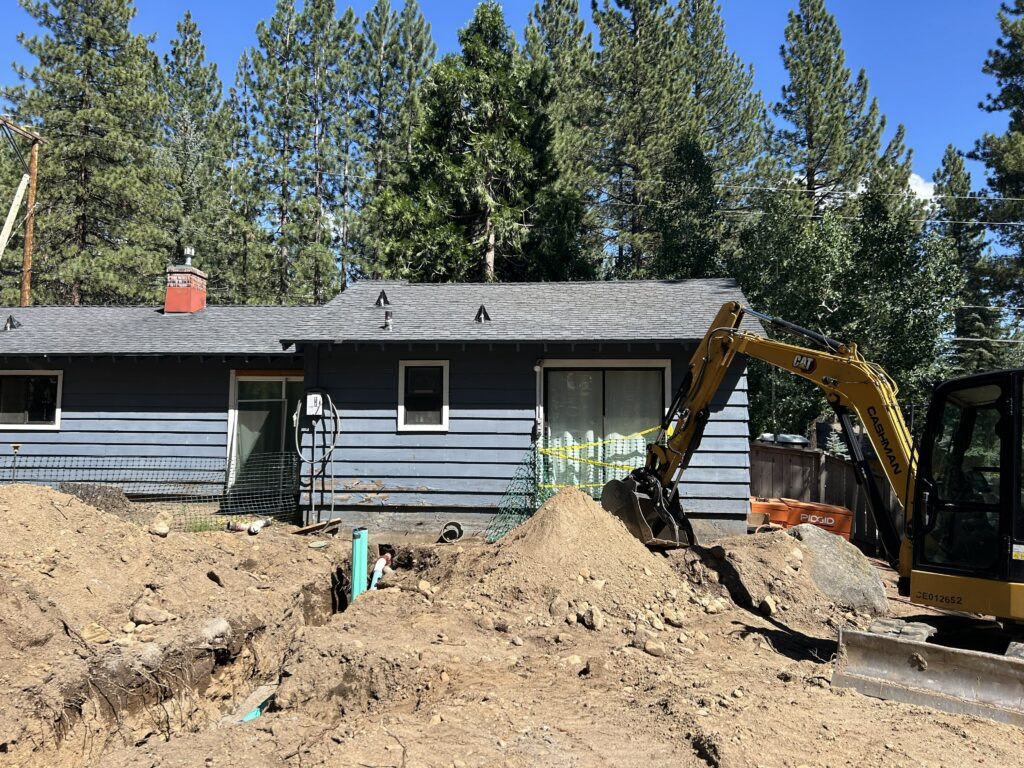
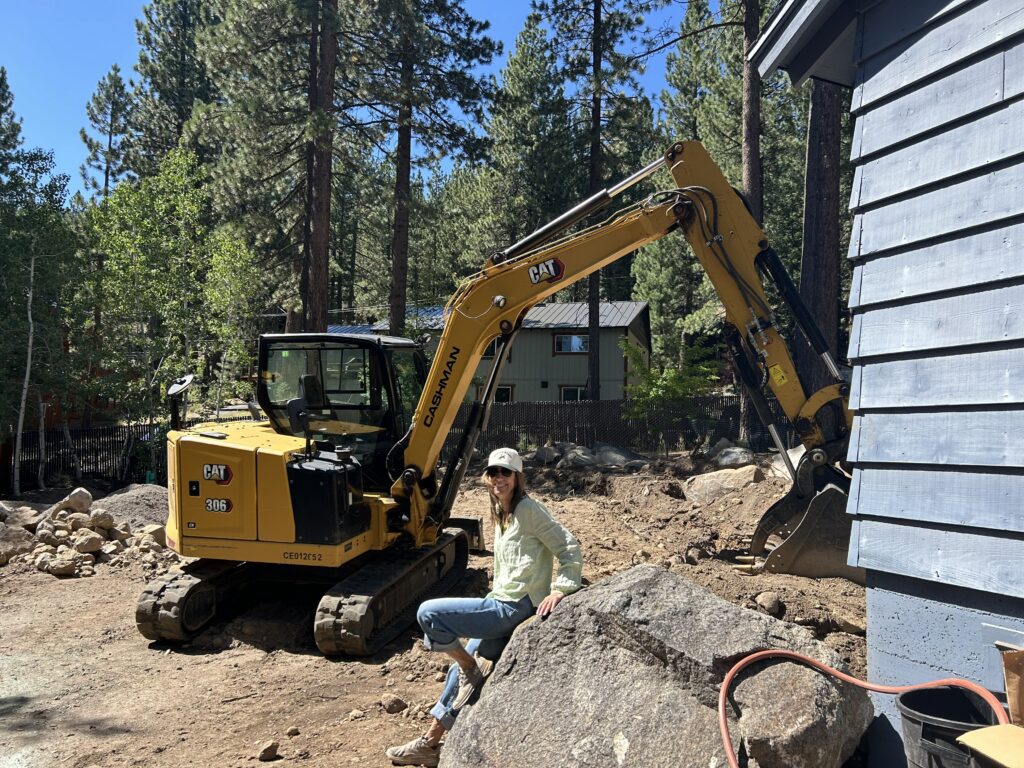
Two years ago, we launched the ADU Accelerator with a simple idea – help homeowners add housing for our workforce and take the hardest parts off their plate. Now it’s real. The first ADU facilitated through the Tahoe Housing Hub’s ADU Accelerator program is under construction in Truckee and this fall it will become home to a local working family.

Currently under construction in the backyard of an existing home, the unit will be a 3-bedroom, 2-bath ADU, big enough for a family that lives and works right here in our community.

Most people build an ADU exactly once. It’s a specialized undertaking that involves design, engineering, financing, permitting, and knowing which experts to bring in at which time. Our client, Leanna, knew she wanted to add a home for a local family. What she needed was a team that had walked this path many times. That’s where we come in. We worked alongside her from the start, weighing manufactured, modular, and stick-built options to find the right fit, then brought in the right professionals at each phase of design, engineering, planning, permitting, and construction. Now that construction is underway, we are still there and will continue with the project through lease-up of the unit.

Leanna has some advice for anyone interested in building an ADU.  “Without the Tahoe Housing Hub, this ADU might never have been built. I only wish I’d brought them in sooner. If you’re considering a project like this, my advice is get the Hub involved as early as you can. The earlier they’re at the table, the smoother everything goes.”

Building housing in the North Lake Tahoe-Truckee region is complex and can be expensive. It can mean hiring a team of experts, at significant cost, to plan, permit, and build a project. The ADU Accelerator provides that expertise from project inception to completion, all at no cost to the homeowner, thanks to generous grant funding from the North Tahoe Community Alliance’s TOT-TBID Dollars at Work and The Martis Fund.

Each homeowner enrolled receives up to $30,000 in expert services. That relatively small public investment is designed to unlock something much larger. Homeowners finance and build the units themselves, turning up to $30,000 in grant-funded support into a completed home worth many times that, up to a 25-fold return on every grant dollar, reinvested directly into local housing.

This first unit is just the start. We have projects in the planning stages throughout Truckee and North Lake Tahoe, in a range of unit types, sizes, bedroom counts, and levels of affordability. Every unit facilitated through the program will be allocated exclusively to local workforce housing. We’re also working on projects for church sites and other commercial properties designed for employee housing.

ADUs have a small footprint and offer a lower-cost, creative way to add infill workforce housing to our community. And with the ADU Accelerator, you don’t need to be a developer to build one. You can add value to your property, potentially generate passive income, and provide a much-needed home for a local worker, all at the same time.

If you’ve ever thought about it, reach out. Visit our website or send us an email at info@tahoehousinghub.org. We’re excited to talk with you about your project ideas.

< Back to News

Tahoe City Affordable Housing Development Meets Funding Challenges

June 12, 2026

By Katelin Welsh – Sierra Sun, June 12, 2026

TAHOE CITY, Calif. – Placer County’s potential Dollar Creek Crossing Affordable Housing Development continues to meet funding challenges, according to an update at a county supervisors meeting on Tuesday.

In 2019, the county bought vacant parcels in Tahoe City across N Lake Blvd. from the 7-11 with the intention of developing housing there.

The county and a selected developer have explored potential mixed-use, mixed-income, and mixed-tenancy plans for the property over the last seven years.

In April of last year, the board directed county staff to pursue a development agreement for an affordable-only project with at least 80 lower-income units.A development agreement would mark the next step in the process; however, staff did not have one to present to the board due to funding challenges.

The developer, Related Norcal Development, LLC, is currently working with the county under a preliminary agreement (set to expire at the end of this month) and has conducted public outreach and provided a revised site plan, a milestone schedule and a financial report for an 80-unit low-income housing development.

The financial report indicates that, to make it feasible, the county would likely need to contribute $18.5 million.

Staff explained at the meeting that if the current developer’s agreement were allowed to expire, the county would be required to submit another request for proposals no later than July of next year.

While some residents during public comment questioned the project’s viability and whether to pull the plug, certain board members expressed support for allowing the project to continue on its current course.

Both Supervisor Cindy Gustafson and Bonnie Gore said obtaining funds may require creativity, with Gustafson mentioning a bond or some type of borrowing.

Additionally, staff mentioned the team is working closely with the county’s Ad Hoc Committee for Housing Funding and Fee Implementation, which may identify funding sources.

< Back to Stories

Housing 101: Decoding Affordable Housing What Do “Big A” and “Little a” Really Mean?

June 12, 2026

When you hear the term “affordable housing,” what comes to mind? For many, it conjures an image of government complexes. For others, it simply means finding a place that doesn’t eat up an entire paycheck. For the North Lake Tahoe Truckee community ‘affordable’ has two meanings and understanding the difference between ‘Big A’ and ‘little a’ housing can inform innovative housing ideas and solution.

The Housing Breakdown: “Big A” vs. “little a”

Housing experts divide affordability into two distinct buckets:

  • “Big A” Affordable Housing (subsidized): This housing is built or preserved using government subsidies, tax credits, and other financial incentives. Because public funds are involved, the units are regulated and reserved for households that qualify based on their income. How low income limits go depends on the program funding the unit.
  • “Little a” affordable housing: This is housing that’s attainable because of how it’s built — its smaller size, efficient construction, or modest design — not because of a subsidy. Often called “affordable by design” (think studios, micro-units, accessory dwelling units, and small cottages), these homes usually carry no income qualification; they’re affordable on the open market because they were built and priced to be.

Not all “little a” housing is built that way on purpose, though. A large share is naturally occurring affordable housing (NOAH) — older, unsubsidized homes that rent for less simply because of their age and condition. It’s market-rate like other “little a” housing, but affordable by circumstance rather than by design.

How “Big A” Eligibility Is Measured: Understanding AMI

In California, the income parameters for “Big A” housing are set using AMI — Area Median Income.

Each year the U.S. Department of Housing and Urban Development (HUD) estimates the median family income for every region, and the California Department of Housing and Community Development (HCD) publishes the official state limits built from it, adjusted for household size. HCD sorts those limits into six income bands. In order, lowest to highest:

  • Acutely Low: up to 15% of AMI
  • Extremely Low: 16–30% of AMI
  • Very Low: 31–50% of AMI
  • Low: 51–80% of AMI
  • Median: 81–100% of AMI
  • Moderate: 101–120% of AMI

There’s no single income cutoff for “Big A” housing because eligibility depends on the program. The most common tool, federal Low-Income Housing Tax Credits, typically serves households up to 60% of AMI (and up to 80% with “income averaging”). But deed-restricted workforce housing, especially in resort regions like ours, often serves households between 80% and 120% of AMI and sometimes higher.

The Latest Local Updates: What Changed in 2026?

HCD released the official 2026 income limits, and the local numbers moved unevenly compared to the year before:

  • Placer & El Dorado Counties: a modest, steady increase.
  • Nevada County: a much larger jump — roughly 12.7% — in its median income figure.

Why the difference? AMI is an income estimate that HUD rebuilds each year from updated census data, so a jump like in Nevada County could come from several directions. Local incomes may have genuinely risen. The mix of residents may have shifted if lower-income households get priced out and move away. The median climbs even when no individual earns more. Or, since these are survey-based estimates, a smaller county’s figure can swing from year to year as the data refreshes. It could be any of these, or a combination.

The Bottom Line: Moving the Needle in Tahoe-Truckee

Affordability isn’t one-size-fits-all. Tracking these AMI shifts matters, because they’re the lines that decide who qualifies for subsidized “Big A” housing. But here’s the hopeful part: not every solution depends on that system.

“Big A” housing takes public capital, tax credits, income-qualified waitlists, and years to assemble. “little a,” affordable-by-design housing doesn’t. A homeowner can add an accessory dwelling unit and rent it to a local worker, attainable housing produced without a single tax-credit deal. That’s exactly what the Tahoe Housing Hub’s ADU Accelerator helps people do, alongside our work advocating for the codes and policies that let more of this housing get built. It’s how we move the needle now, while the bigger pieces come together.

To explore the data behind our local housing need and see exactly what kinds of housing our community is missing read the 2025 Tahoe-Truckee Regional Housing Needs Assessment.

2026 State Income Limits – Area Median Income (AMI) per Number of Persons in Household

Number of Persons in Household12345678
Adjustment Factor70%80%90%Base108%116%124%132%

Nevada County Area Median Income: $140,400

Income Category12345678
Acutely Low14,75016,85018,95021,05022,75024,40026,10027,800
Extremely Low26,30030,05033,80037,55040,60044,36050,04055,720
Very Low Income43,80050,05056,30062,55067,55072,60077,60082,600
Low Income70,05080,05090,050100,100108,100116,150124,100132,150
Median Income98,300112,300126,350140,400151,650162,850174,100185,350
Moderate Income117,950134,800151,650168,500182,000195,450208,950222,400

Placer County Area Median Income: $124,000

Income Category12345678
Acutely Low13,00014,90016,75018,60020,10021,60023,05024,550
Extremely Low27,60031,55035,50039,40042,60045,75050,04055,720
Very Low Income46,00052,60059,15065,70071,00076,25081,50086,750
Low Income73,60084,10094,600105,100113,550121,950130,350138,750
Median Income86,80099,200111,600124,000133,900143,850153,750163,700
Moderate Income104,150119,050133,900148,800160,700172,600184,500196,400

El Dorado County Area Median Income: $124,000

Income Category12345678
Acutely Low13,00014,90016,75018,60020,10021,60023,05024,550
Extremely Low27,60031,55035,50039,40042,60045,75050,04055,720
Very Low Income46,00052,60059,15065,70071,00076,25081,50086,750
Low Income73,60084,10094,600105,100113,550121,950130,350138,750
Median Income86,80099,200111,600124,000133,900143,850153,750163,700
Moderate Income104,150119,050133,900148,800160,700172,600184,500196,400
< Back to Stories

ADU Accelerator: Lessons Learned

May 20, 2026

ADU Accelerator: Harder than Expected, Better than we’d Hoped

When the Tahoe Housing Hub launched our ADU Accelerator Pilot Program in the fall of 2024, the community response was incredible. We received over 100 inquiries and registered more than 80 interested participants. We were poised to help homeowners build backyard Accessory Dwelling Units (ADUs) to house our local workforce.

What followed was nearly two years of hard lessons. As individual projects progressed, the realities of building in North Lake Tahoe came into clear focus — and we had to adapt. We found new products, built out our consultant team, and learned what it actually takes to move housing projects across the finish line in this region. It took time. But here we are.

The Reality of the Basin: High Costs and Complexities

Many of our participants quickly ran into a major roadblock: the extreme complexity and high cost of traditional construction in our region. For a significant number of property owners, the math simply didn’t add up, forcing them to put their ADU dreams on hold.

Determined to find a solution, we dove deep into researching alternative construction methods to cut costs and speed up build times. This search led us directly to factory-built housing, including prefabricated, modular, panelized, and Tiny Homes on Wheels (THOWs).

Exploring Factory-Built Solutions

Prefab and modular homes offer distinct advantages over traditional stick-built construction. Because most of the building happens inside a climate-controlled factory, weather delays disappear. Builders do not need to worry about working through our harsh winters; instead, delivery and installation can be scheduled seamlessly during the summer months.

As we worked with participants, it became clear that different situations called for different solutions. For some, factory-built or traditional construction was the right path. For others — particularly organizations with underutilized land who needed something simpler and faster to deploy — Tiny Homes on Wheels turned out to be the answer.

A Growing Portfolio: Stick-Built, Conversions, and Tiny Homes on Wheel

After months of rigorous research, we found a manufacturer capable of producing THOWs that meet our strict local snow load requirements at an affordable price point. With this new tool in hand, we expanded our outreach. We looked beyond individual homeowners to partner with:

  • Churches
  • Special districts
  • Local businesses
  • Organizations with underutilized land and a vital need for workforce housing

We now have seven organizational clients in the pipeline, on track to add up to 20 THOWs within the next year.

And that’s not all — traditional projects are moving forward too. We currently have two detached ADUs and six conversion units under construction this summer, proving that conventional ADU pathways remain viable in the North Tahoe/Truckee region.

There is No “One Size Fits All” Solution

The biggest lesson we learned from our pilot program is that there is no single way to build an ADU in the North Tahoe/Truckee region.

As the very first units facilitated by the ADU Accelerator Program hit the construction phase, we are incredibly excited for the future. Whether it is a tiny home on wheels, a garage conversion, or a traditional stick-built detached unit, the lessons we have learned have shown us exactly what is possible. We look forward to helping many more property owners become a tangible part of our local housing solution.

To learn more about the free technical services offered through our ADU Accelerator program – please reach out! You can contact us at info@tahoehousinghub.org or by visiting our website HERE.

< Back to Stories

Voices for Housing Episode 4: Alison Part 2

May 20, 2026

This is part 2 of Alison’s story. After years of moving from one rental to another, she and her family reached a tipping point – move out of the area or stay and find a forever home. Alison shares more about the difficulty of first-time home ownership in the Tahoe region and how they made it work.

The Voices for Housing campaign is made possible thanks to a generous grant from the North Tahoe Community Alliance’s TOT-TBID Dollars at Work Program.

< Back to Stories

Voices for Housing Episode 3: Alison Part 1

April 14, 2026

In this episode of Voices for Housing, we introduce you to Alison. Her work is critical to the environmental protection of Lake Tahoe. Alison explains how difficult it is to hire and retain quality workers simply because they cannot find affordable housing. This impacts not just the workers themselves, but the businesses who want to hire them. Building a thriving local economy is tied directly to having safe, dignified, affordable housing for local workers. This is Part 1 of Alison’s story.

The Voices for Housing campaign is made possible thanks to a generous grant from the North Tahoe Community Alliance’s TOT-TBID Dollars at Work Program.

< Back to Stories

Voices for Housing Episode 2: Xander

March 18, 2026

This week we introduce you to Xander Guldman, a professional skier raised in Truckee who has come back after college to build his life here. For Xander, Tahoe/Truckee isn’t just where he skis. The mountains he grew up on, the community he’s built his life around, and the access to the outdoors make everything else in his life possible. But it all depends on the availability of affordable housing. Listen to Xander’s take on what makes this place so special and also so hard to hold onto.

The Voices for Housing campaign is made possible thanks to a generous grant from the North Tahoe Community Alliance’s TOT-TBID Dollars at Work Program.

STAY INFORMED AND STAY CONNECTED

Get important updates and timely information about workforce housing in our region.