The Housing We’re Not Counting – and The Impact on Lake Tahoe
August 20, 2026
The Housing We’re Not Counting
Some of the most important affordable housing in our region may be quietly slipping away, and once it does, any new housing we build stops adding and starts replacing.
Recently, we dug into property and county records in eastern Placer County, searching for older multi-family housing from duplexes to apartment buildings. We focused on properties held by the same owners for at least 10 years who don’t live on site. We found more than 90 that fit our criteria. Most were built in the 1960s or earlier, sit in the Tahoe Basin, and have not changed hands in decades.
What This Housing Is
These buildings are what we call NOAH, or Naturally Occurring Affordable Housing, meaning housing that is affordable to residents without any public subsidy or deed restriction. It was never built as affordable housing. It simply got old, stayed modest, and kept rents within reach.
Why It Is at Risk
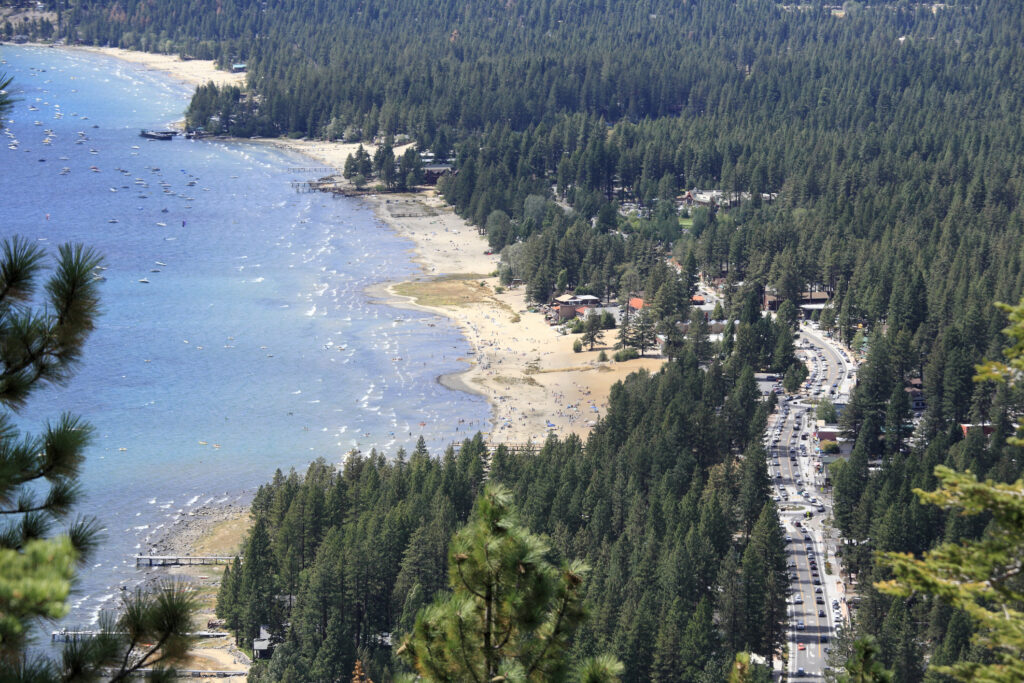
National and state research shows housing like this is often lost when it changes hands, redeveloped or repriced to the market. We are seeing early signs of this trend here, with older buildings listed at prices based on their redevelopment potential rather than the rent they produce. Unlike most places, in the Tahoe Basin we cannot easily build replacements. The Basin holds only a few thousand small multi-family units with little room to add more. Every unit lost here tends to stay lost.
The Lake Tahoe Connection
There is an environmental angle too. Housing people close to where they work is part of what helps keep the region’s commuter traffic in check. Losing this close-to-work housing can potentially add more cars to the road. According to TRPA data, workers who commute into the basin drive almost twice the daily miles of a workers who live here, roughly 24 versus 13 miles. All that additional driving creates sediment that impacts lake clarity. The loss of multi-family rentals has the potential to exacerbate this issue. Every worker housed locally is a worker who does not have to commute, providing environmental benefits like:
- Reduced Vehicle Miles Traveled (VMT) across the region.
- Reduced road sediment running into Lake Tahoe.
- Easing of traffic and emissions.
Our Solution: Active Preservation
At Housing Trust Tahoe, we are actively pursuing the acquisition of these multi-family units. Our strategy is simple:
- Acquire older multi-family properties before they change hands.
- Invest in the buildings, bringing them up to current standards.
- Place a deed restriction so they stay affordable for residents for decades.
Preserving this housing keeps our community whole. It keeps a real mix of people living in Tahoe, from workers to retirees to families who have been here for generations.
How You Can Help
We cannot do this alone. If you own a home, a vacant lot, or a multi-family property on the North Shore, we want to talk to you.
As a 501(c)(3) non-profit organization, we can structure property acquisitions in various ways, including outright sales, partial donations, or full donations, that provide significant tax benefits to the seller.
Help us protect Tahoe’s environment and its workforce. Reach out to us today at info@tahoehousinghub.org to explore your options.